VLSI training and placement

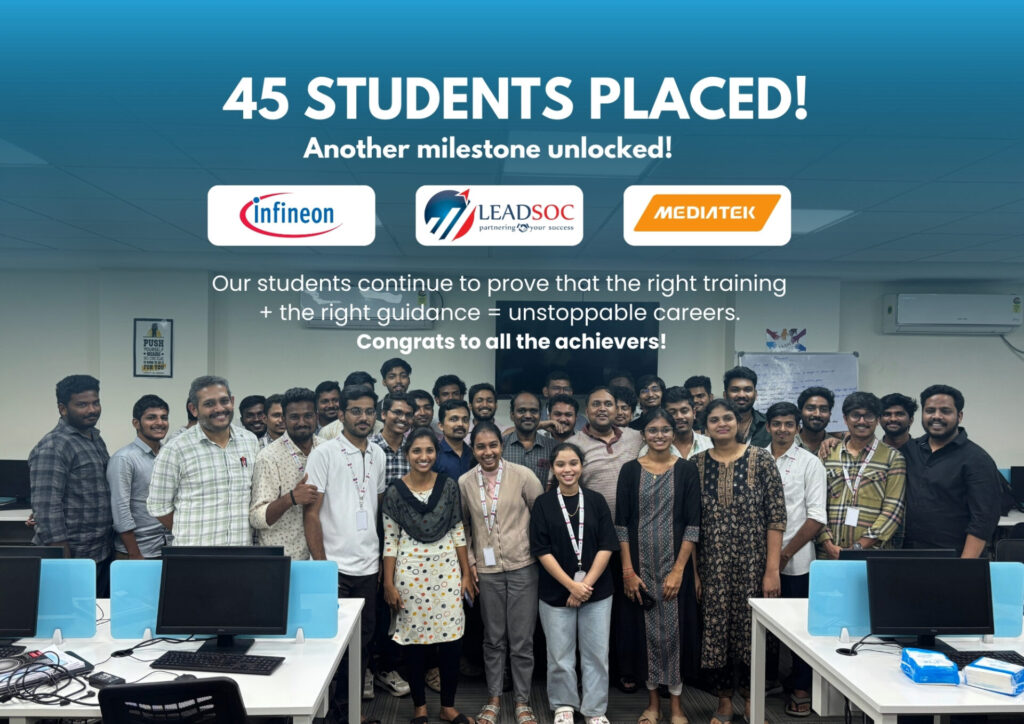
45 Students Placed: A Major Milestone for StarVLSI Training Institute

45 student placement top vlsi training institute

The VLSI industry doesn’t reward certificates. It rewards skills, project depth, and backend readiness. This month, StarVLSI crossed a clear, measurable milestone that proves this point again.

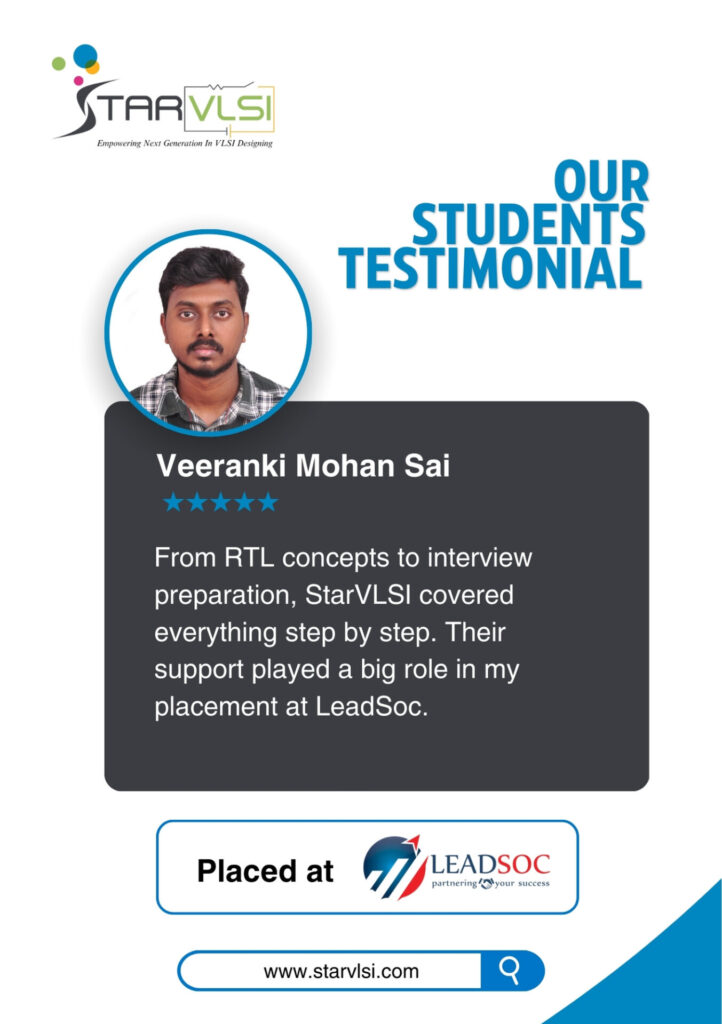
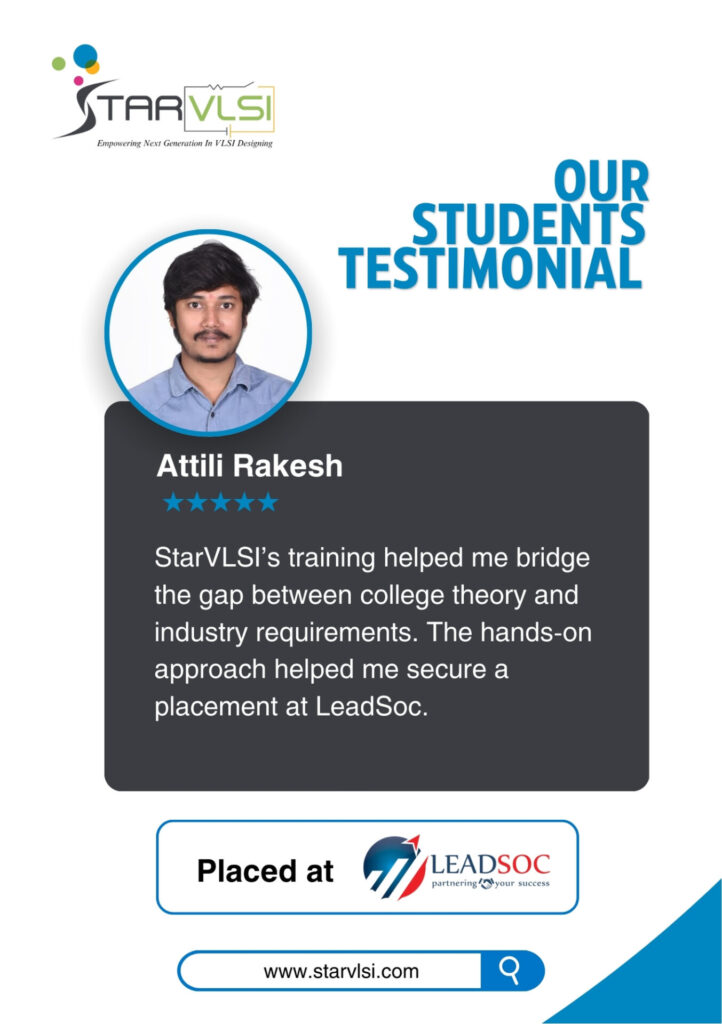
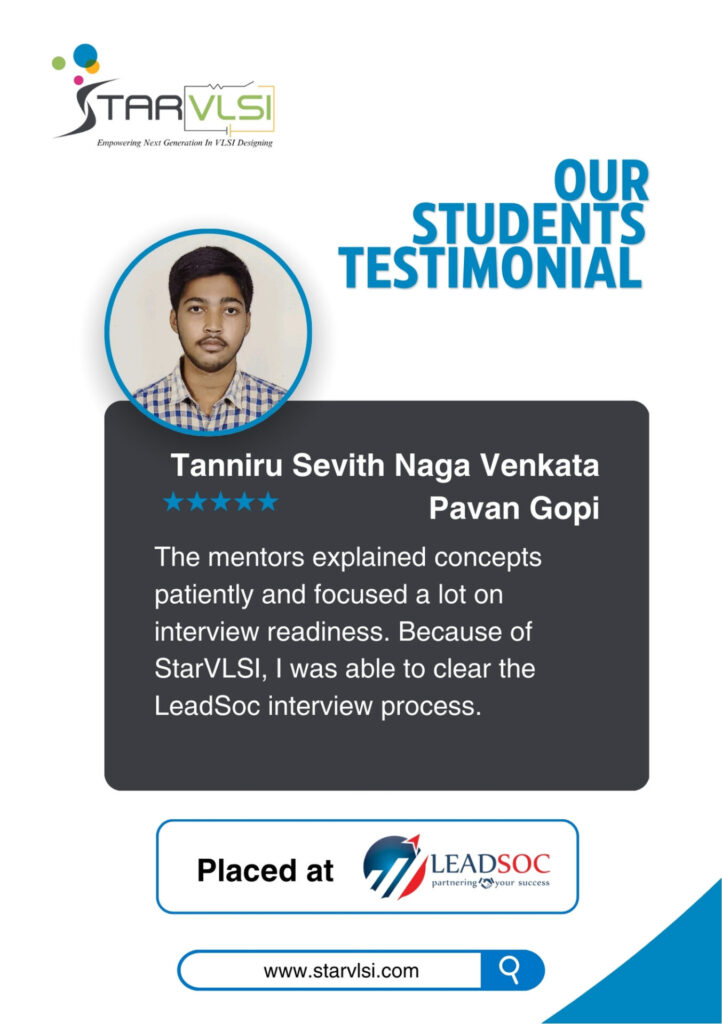
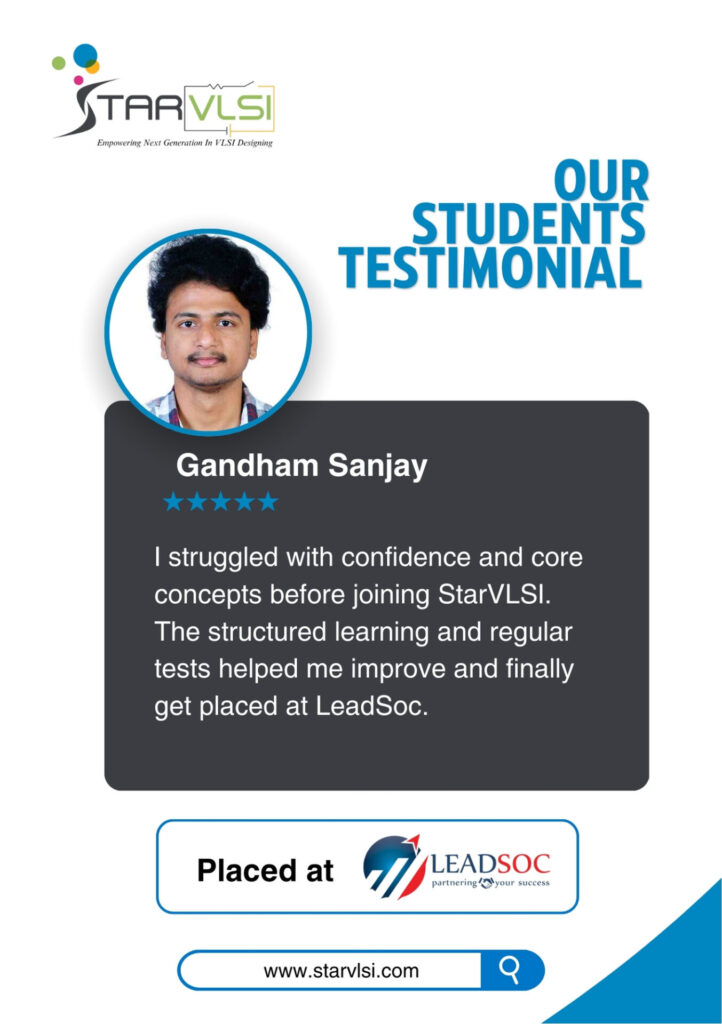
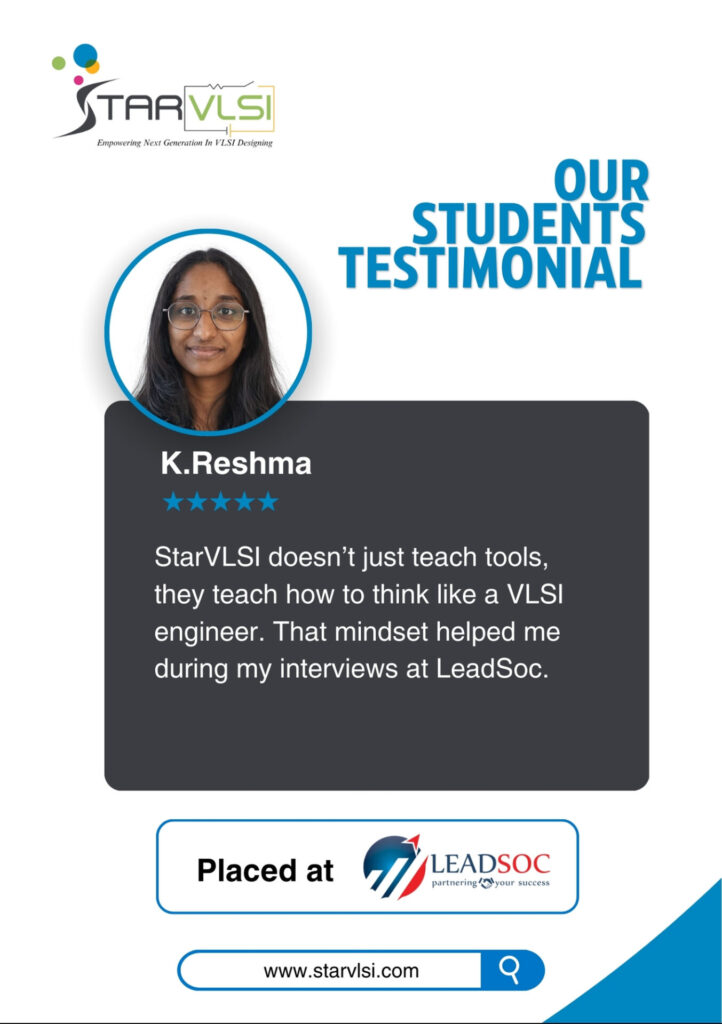
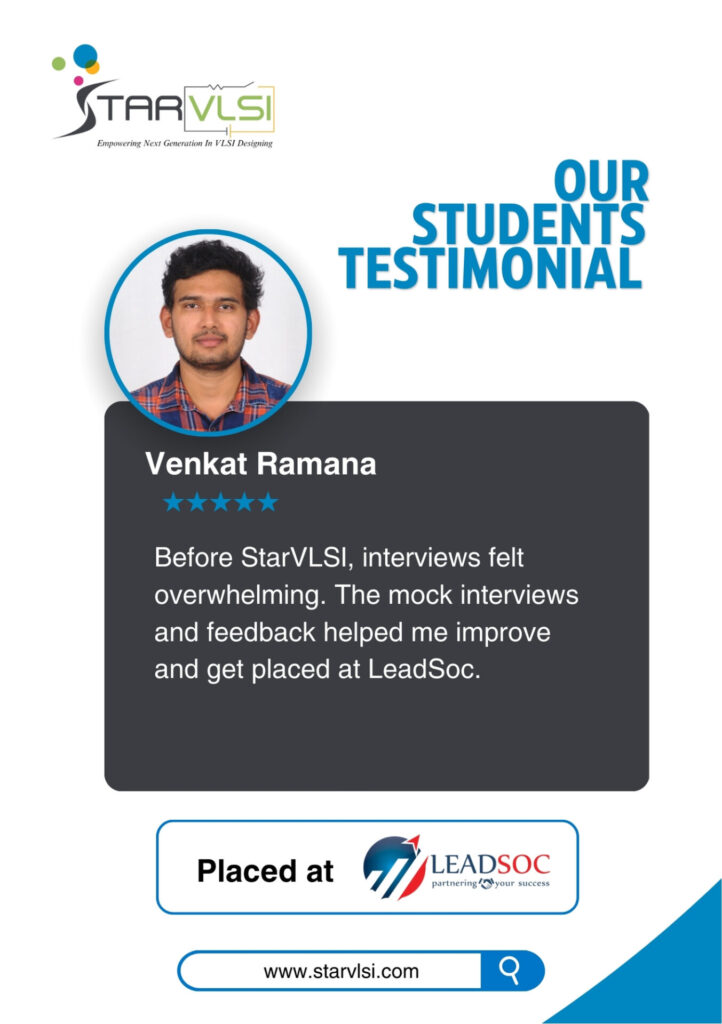
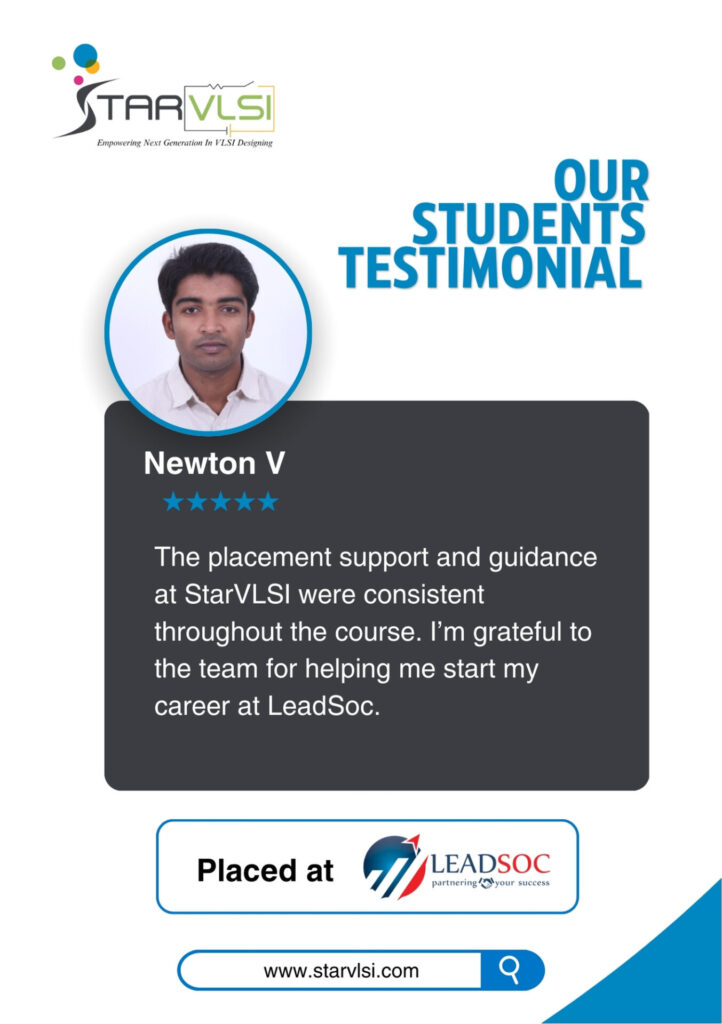
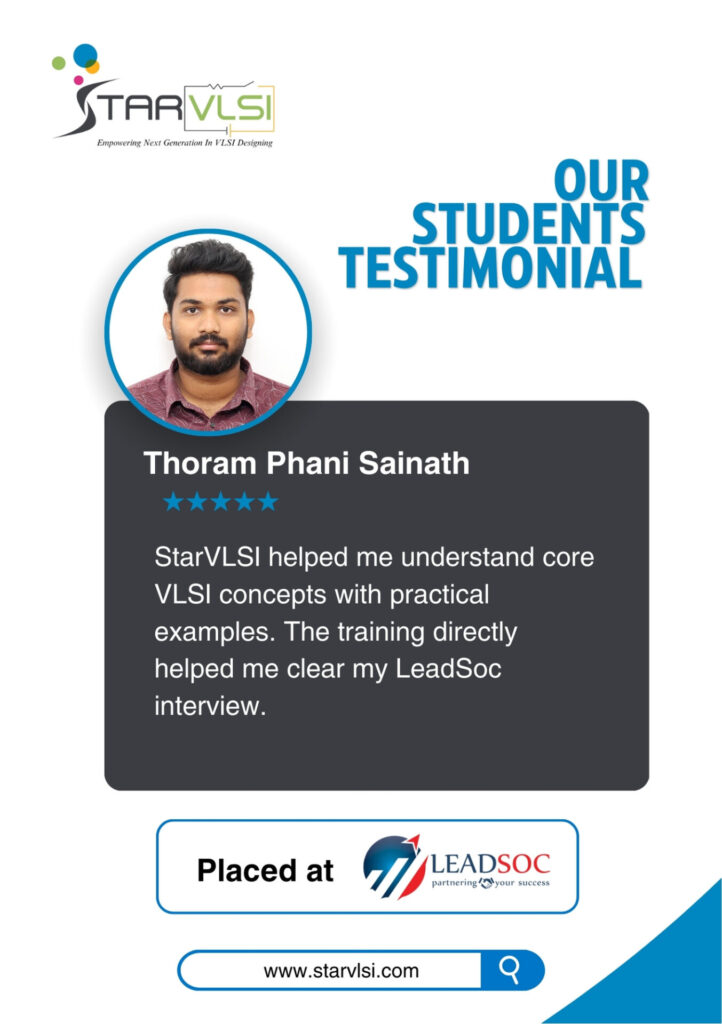
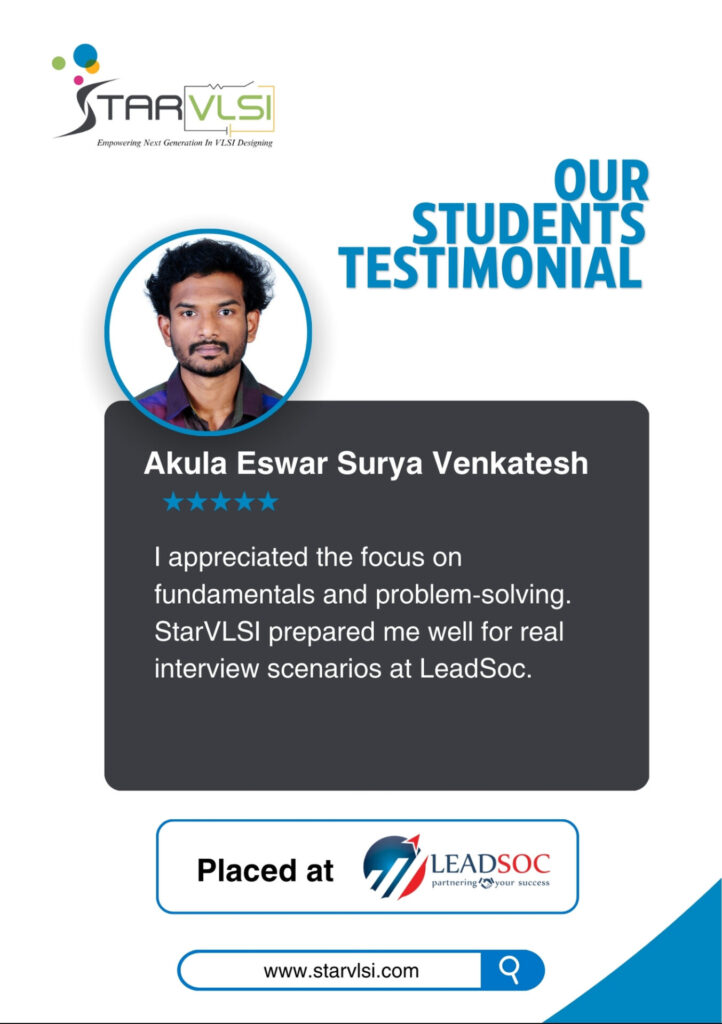
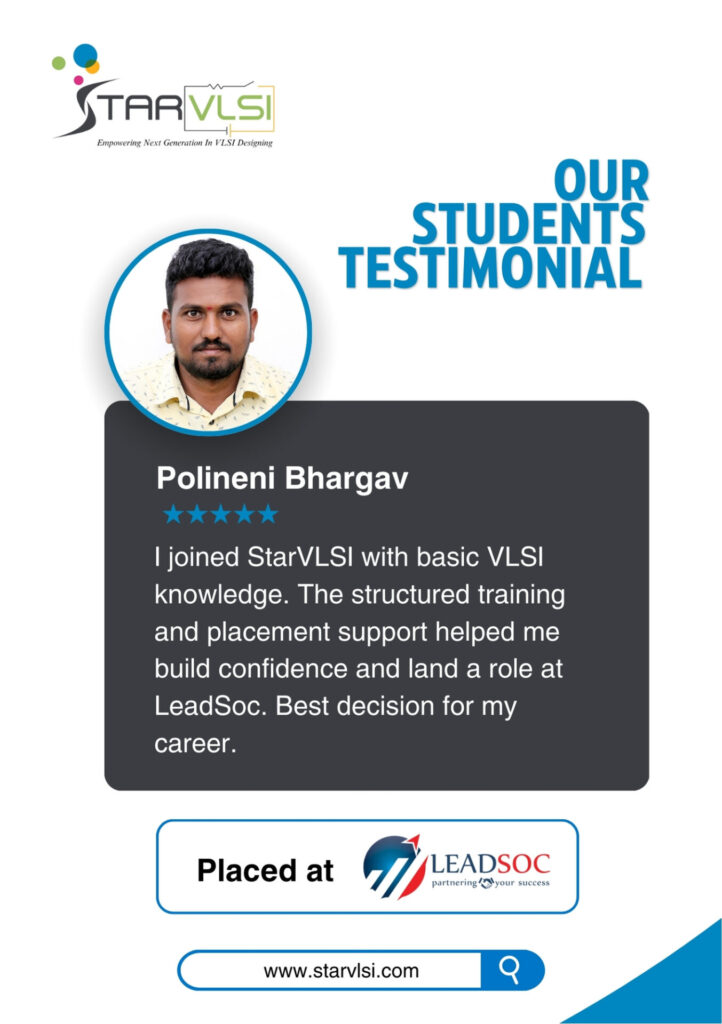
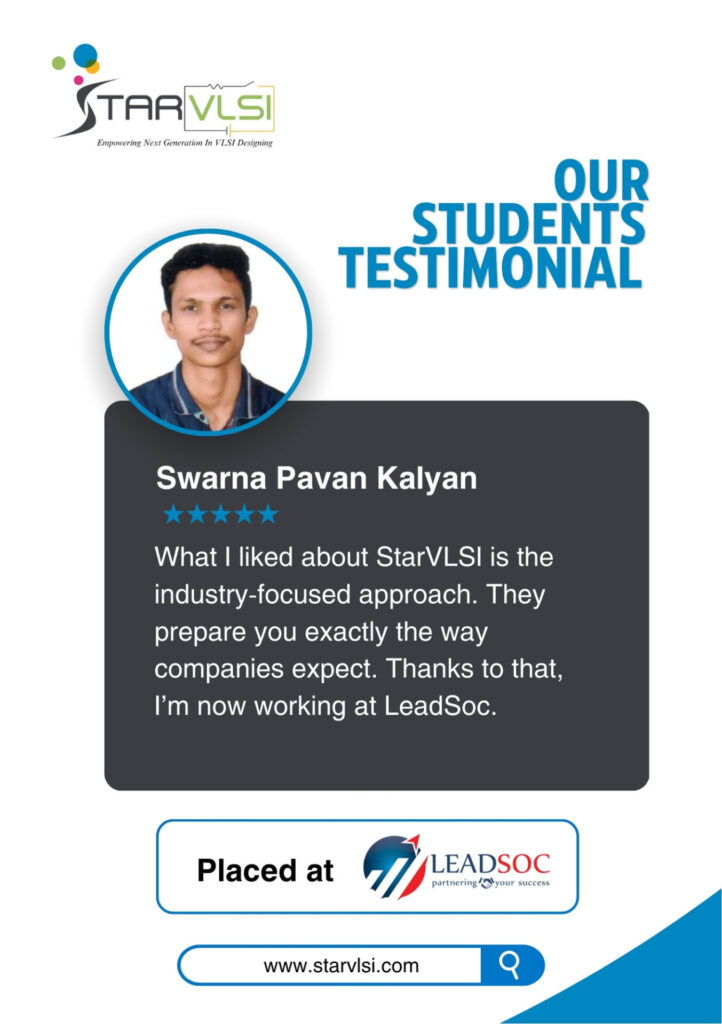
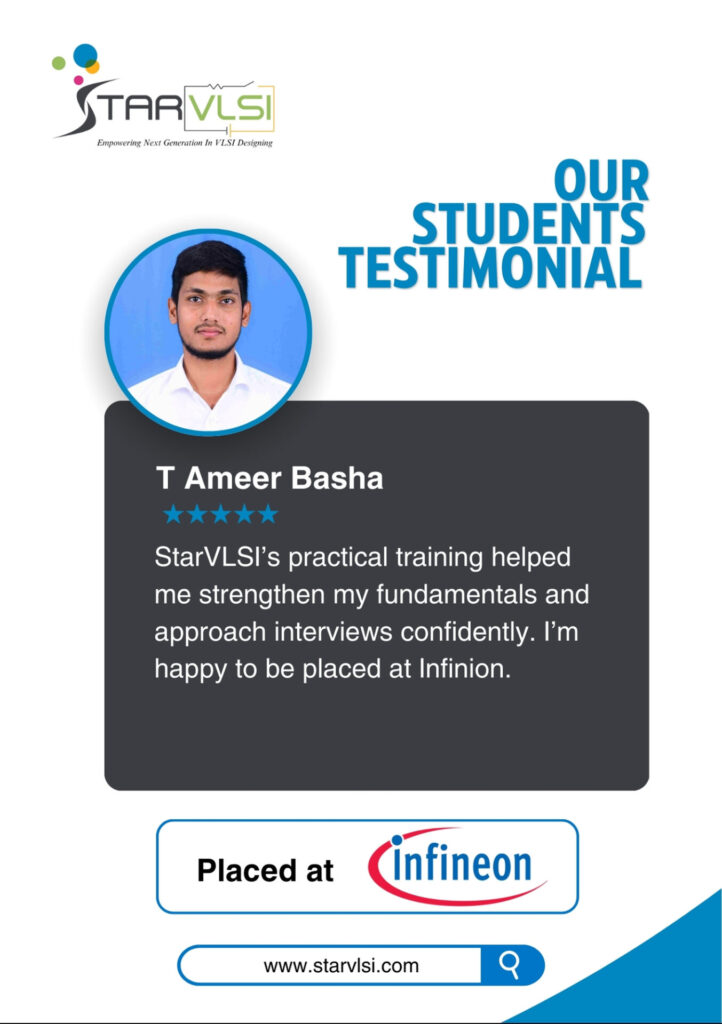
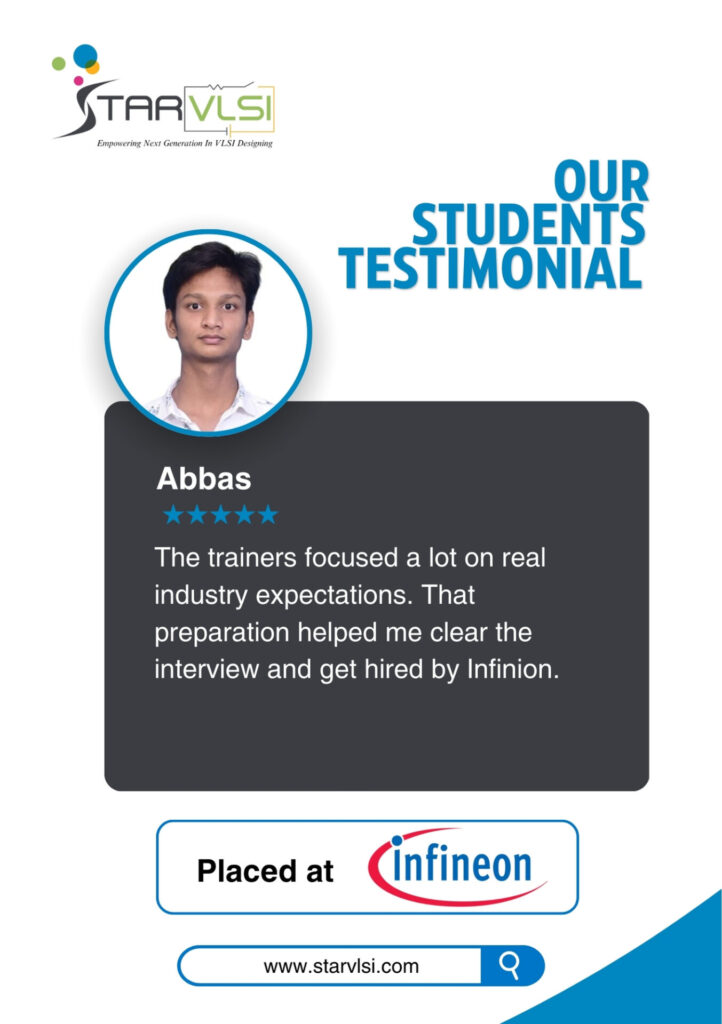
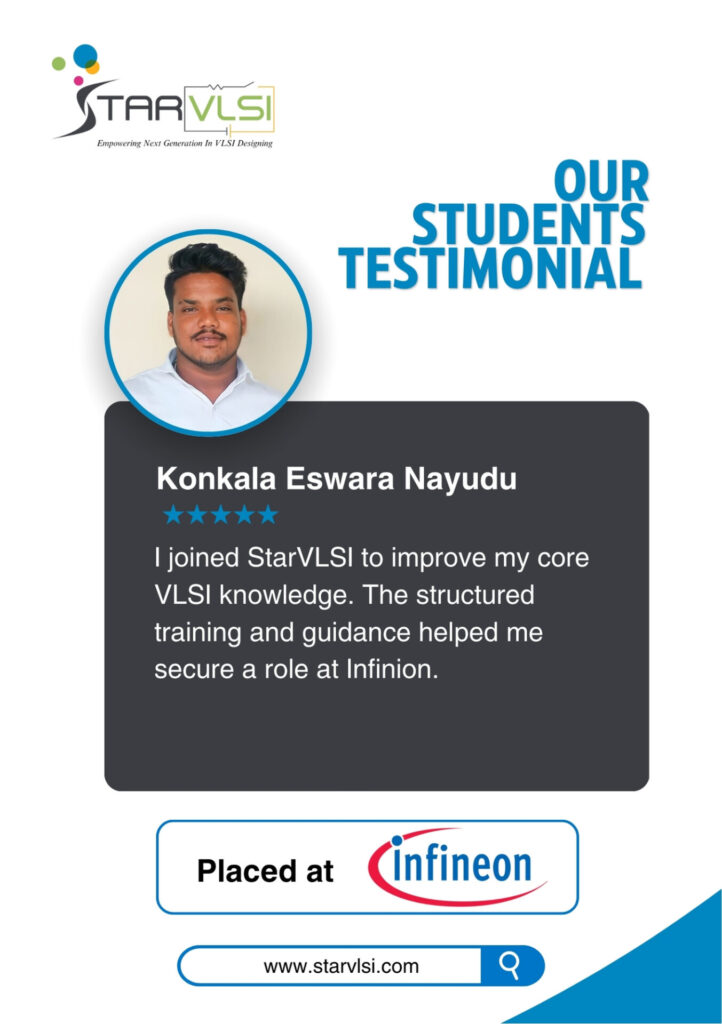
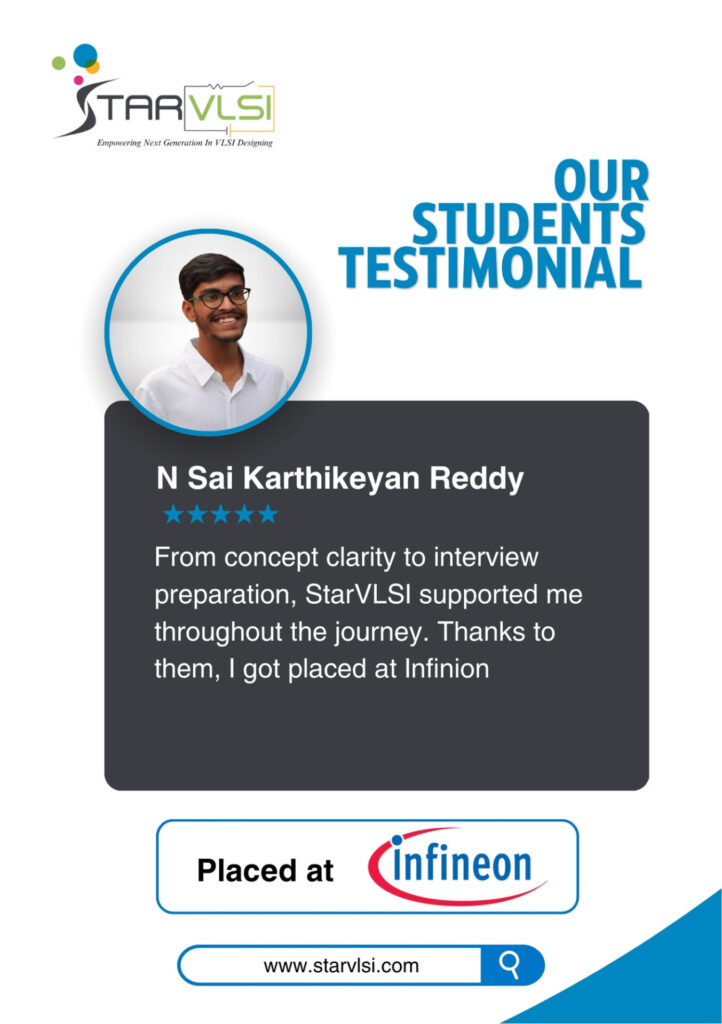
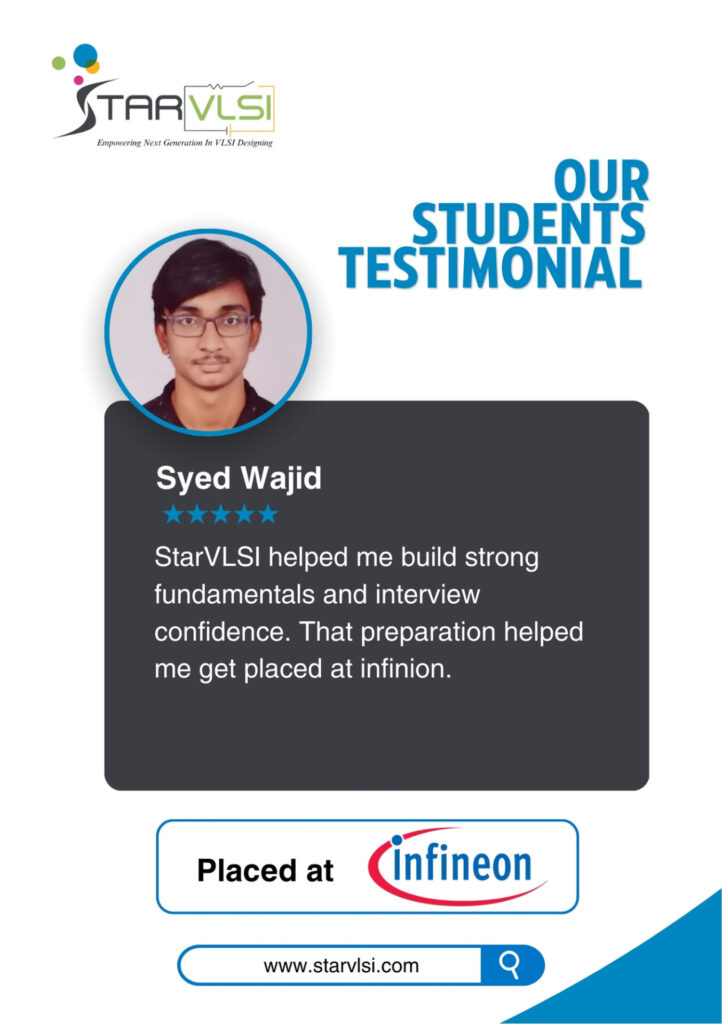
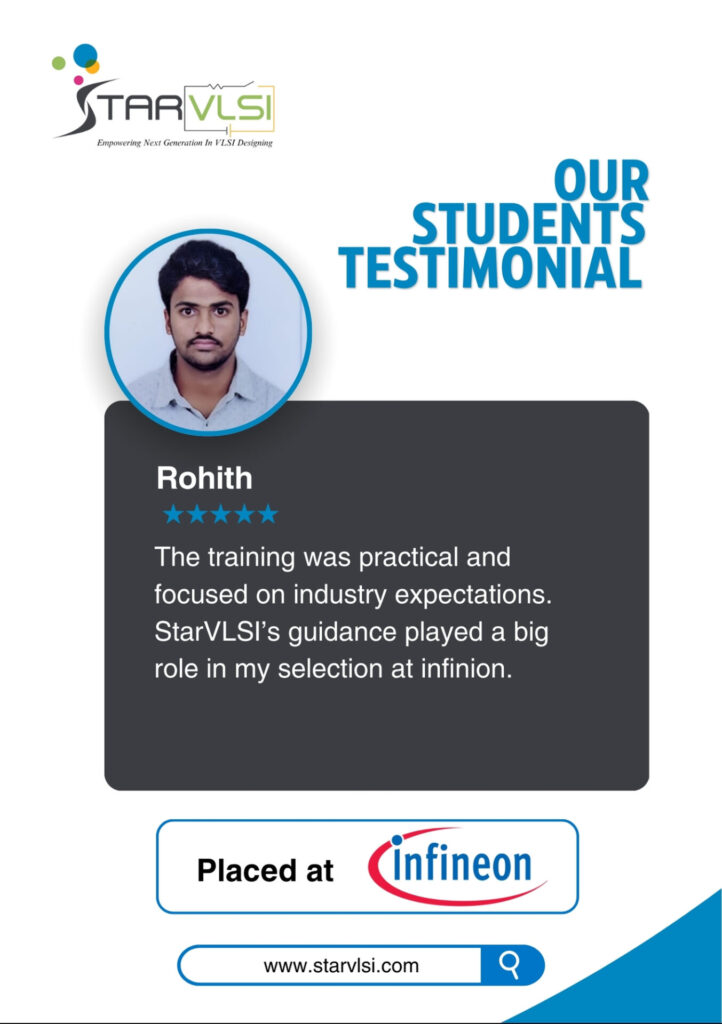
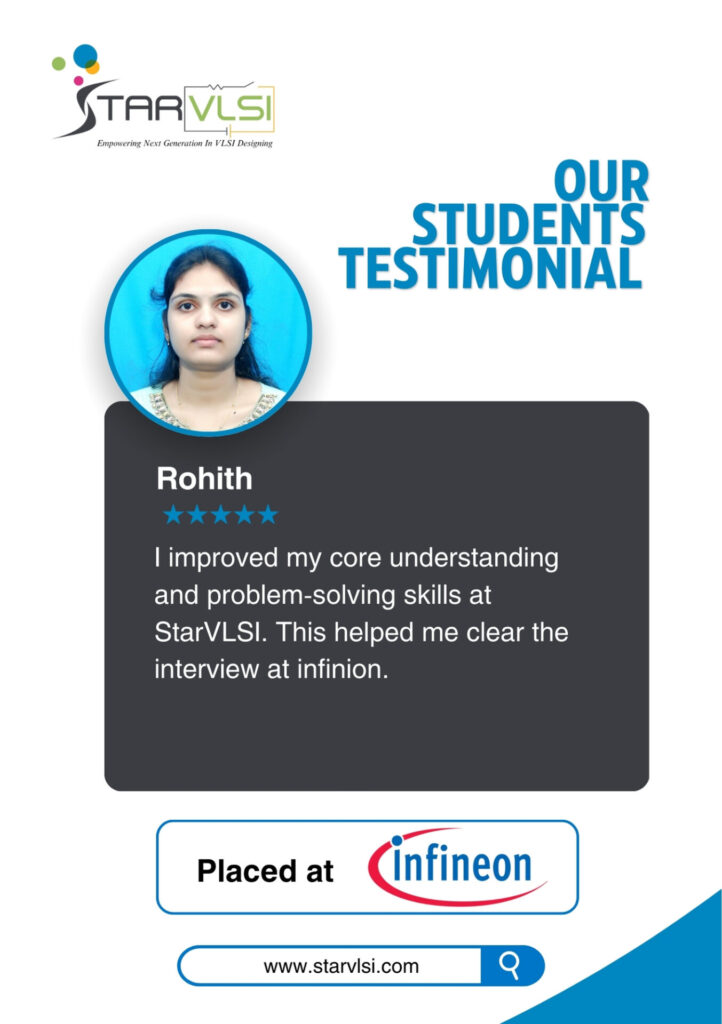
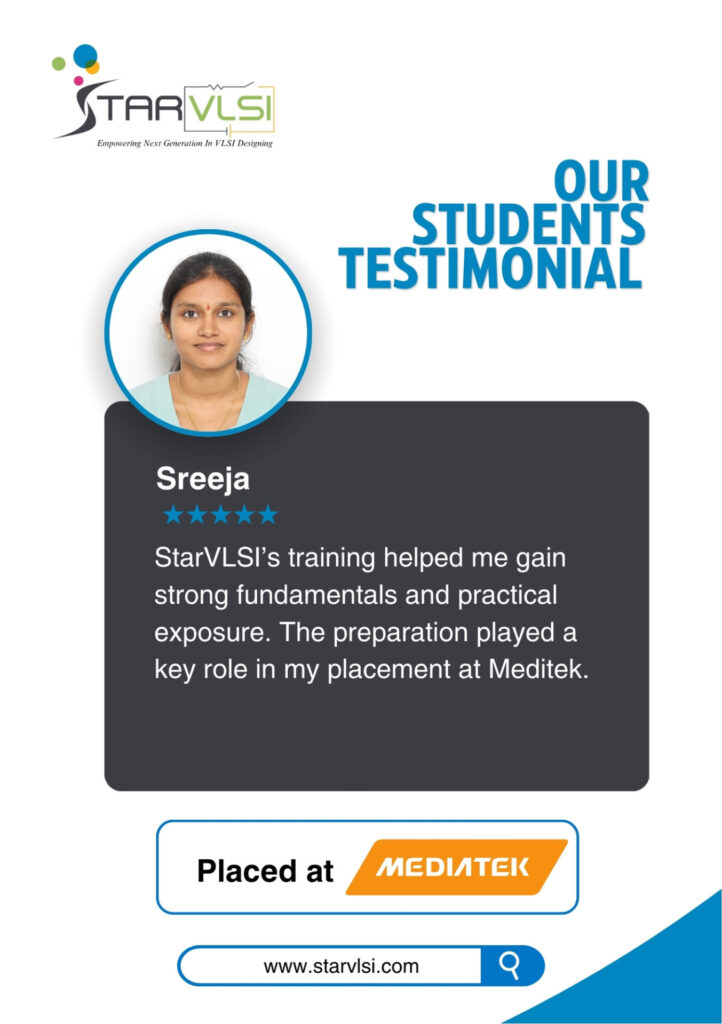
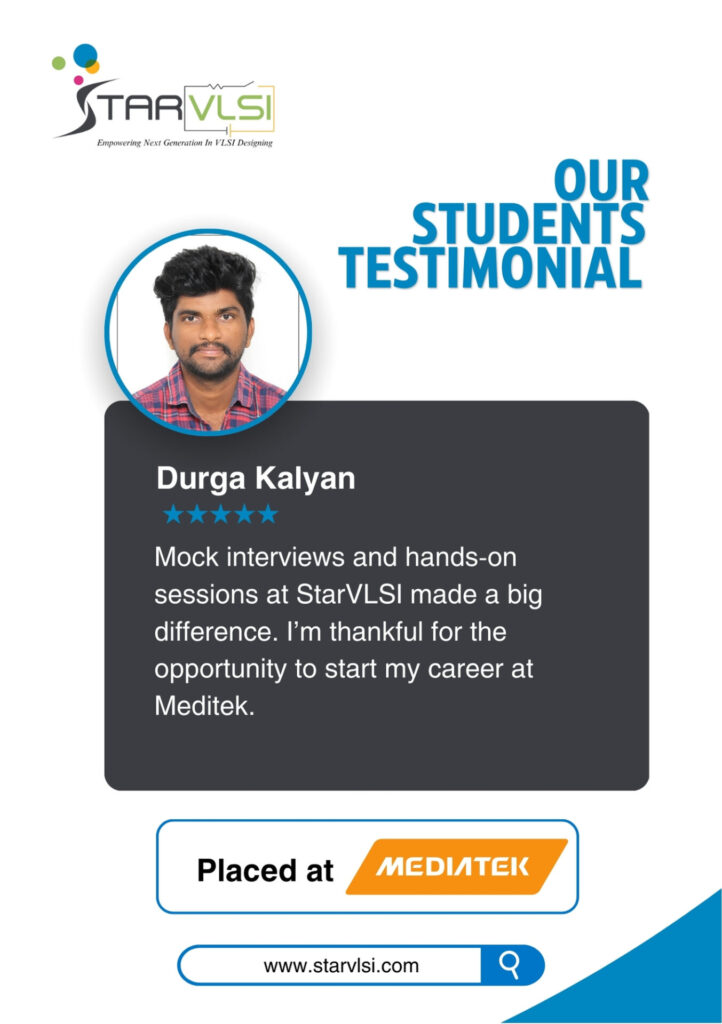
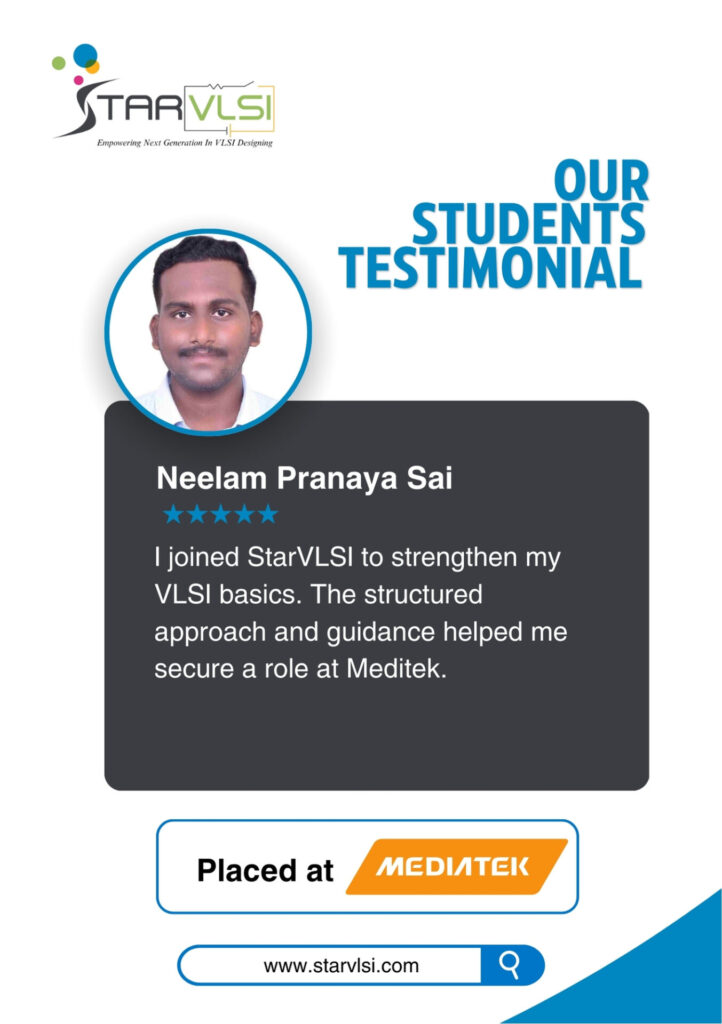
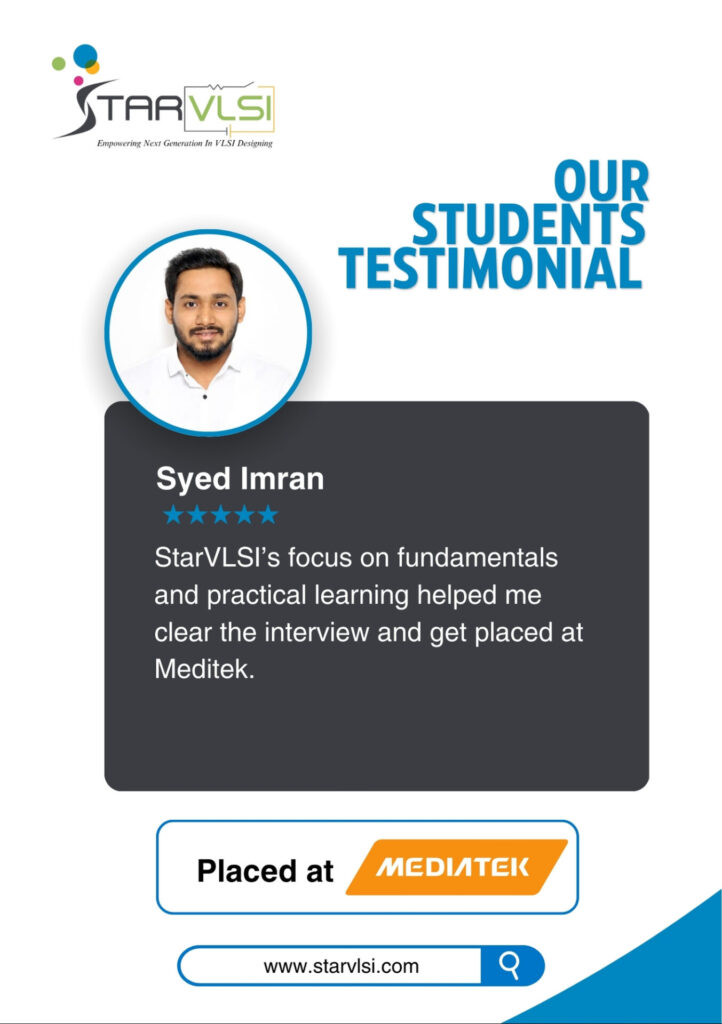
45 students have been successfully placed in leading semiconductor and design service companies including Infineon, LeadSoc, and MediaTek.

This isn’t luck. It’s the outcome of focused VLSI training, strong backend VLSI fundamentals, and industry-aligned course structure.

Why These Placements Matter in Today’s VLSI Job Market

The VLSI hiring landscape has changed. Companies are no longer impressed by surface-level RTL knowledge or short-term crash courses. They are hiring engineers who can contribute to real backend VLSI flows from day one.

The students placed from StarVLSI were evaluated on:

  • Physical Design fundamentals

  • Timing closure and STA concepts

  • Floorplanning, placement, CTS, and routing

  • Real-time tool exposure

  • Interview-oriented problem solving

This is exactly what backend VLSI roles demand today.

Companies That Trusted StarVLSI-Trained Engineers

Getting placed is one thing. Getting placed in core semiconductor companies is another.



A global semiconductor leader known for automotive, power, and industrial ICs. Placement here requires solid backend VLSI understanding and process awareness.

A fast-growing VLSI design services company that hires engineers who can adapt quickly to real project environments.



A globally respected fabless semiconductor company where backend VLSI engineers are expected to work on production-grade designs.

These companies don’t hire based on marketing claims. They hire based on interview performance and project depth.

What Makes StarVLSI’s Backend VLSI Training Different

Most VLSI courses promise “placements.” Few build engineers who can survive technical interviews.

StarVLSI’s backend VLSI training focuses on:

  • Complete Physical Design flow, not fragmented topics

  • Industry-relevant tools and methodologies

  • Interview-focused problem-solving sessions

  • Real-world design scenarios instead of textbook examples

  • Continuous mentor feedback

This approach directly improves placement outcomes.

VLSI Course Structure Built for Real Jobs, Not Just Exams

The VLSI course curriculum is aligned with what semiconductor companies actually test:

  • Physical Design fundamentals

  • Timing analysis and optimization

  • Backend VLSI workflows

  • Design constraints and corner cases

  • Debugging and interview scenarios

That alignment is why placement numbers keep growing.

Why VLSI Training Quality Matters More Than Ever

With increasing competition in the semiconductor space, companies are filtering aggressively. Only candidates with:

  • Strong backend VLSI basics

  • Hands-on tool exposure

  • Clear conceptual understanding

are making it through interviews.

This milestone of 45 students placed is proof that structured VLSI training still works when done right.
Final Thoughts

Placements are not marketing slogans. They are outcomes.

StarVLSI’s latest placement milestone reinforces one simple truth:
Right training + right guidance = sustainable VLSI careers.

For students serious about backend VLSI, Physical Design, and long-term growth in the semiconductor industry, this result speaks louder than any brochure ever could.


Frequently Asked Questions (FAQ) – VLSI Training & Placements at StarVLSI

1. What is VLSI training and why is it important for semiconductor jobs?

VLSI training prepares engineers to design, verify, and implement integrated circuits used in modern electronics. With the growth of semiconductor companies, structured VLSI training is essential to gain industry-relevant skills, especially for backend VLSI and physical design roles.

2. What is backend VLSI training?

Backend VLSI training focuses on the physical implementation of chips after RTL design. It includes: Floorplanning Placement and routing Clock Tree Synthesis (CTS) Static Timing Analysis (STA) Sign-off checks Backend VLSI engineers are in high demand due to their direct impact on chip performance and manufacturability.

3. Who should take a VLSI course?

A VLSI course is ideal for: Electronics and Electrical engineering graduates Freshers aiming for semiconductor jobs Working professionals transitioning into backend VLSI Engineers preparing for physical design interviews No shortcuts here. Fundamentals still matter.

4. Does VLSI training really help in getting placements?

Yes, if the training is industry-aligned. Placement success depends on: Depth of backend VLSI concepts Hands-on tool exposure Interview-focused preparation Real project understanding The recent placement of 45 students proves that structured VLSI training delivers results when done properly.

5. What companies hire backend VLSI engineers?

Backend VLSI engineers are hired by: Semiconductor product companies Fabless chip companies VLSI design service firms Companies like Infineon, LeadSoc, and MediaTek regularly hire candidates with strong backend VLSI fundamentals.

6. What skills are required for backend VLSI jobs?

Key skills include: Physical Design flow knowledge Timing analysis and optimization Understanding of constraints and corners Problem-solving ability for real design issues A good backend VLSI course focuses on all of these, not just theory slides.

7. How long does it take to complete a VLSI course?

Most comprehensive VLSI courses take 3 to 6 months, depending on depth and specialization. Backend VLSI training usually requires more time due to its complexity and practical nature. Anyone promising mastery in a few weeks is selling optimism, not skills.

8. Is backend VLSI a good long-term career?

Yes. Backend VLSI offers: High demand in semiconductor industry Strong salary growth with experience Opportunities in global product companies As chip complexity increases, backend VLSI engineers become harder to replace.

9. What is the difference between frontend and backend VLSI?

Frontend VLSI focuses on RTL design and functional verification Backend VLSI focuses on physical implementation and timing closure Both are important, but backend VLSI roles often have fewer candidates and higher entry barriers.

10. Why choose a specialized VLSI training institute?

A specialized VLSI training institute provides: Industry-experienced mentors Tool-oriented learning Placement-focused preparation Real-world backend VLSI exposure Generic courses don’t survive real interviews. Specialized ones do.

11. Are placements guaranteed after completing a VLSI course?

No institute can guarantee placements honestly. What matters is: Quality of training Student effort Interview readiness Strong VLSI training significantly improves placement probability, as shown by consistent placement results.

12. What makes StarVLSI different from other VLSI institutes?

StarVLSI emphasizes: Backend VLSI depth over surface knowledge Industry-aligned curriculum Interview-driven preparation Proven placement outcomes Results matter more than slogans.

About the Author

Leave a Reply

Your email address will not be published. Required fields are marked *

You may also like these

Apply for screening test get upto 20,000/- off hurry!!
New Batches on February 23 2026 Physical Design
Fill your details to unlock exclusive deals and stay updated with the latest industry Trends in VLSI Designing. Never Miss Out!!
APPLY FOR SCREENING TEST GET UPTO 20,000/- OFF HURRY!!
New Batches Starting January 2026 Advance Physical Design
Fill your details to unlock exclusive deals and stay updated with the latest industry Trends in VLSI Designing. Never Miss Out!!